From Japan to the West
There is a voice note on my phone from a tea farm in Kagoshima. There is no talking on it, just the sound of birds, insects and the wind moving through the hills. I recorded it because I remember standing there thinking I need to take this feeling home with me.
In April 2026, we travelled to Japan to visit the tea farms in Kagoshima. I had built up quite a romantic image of what the Japanese tea fields would be like, so part of me expected reality to ruin it a little.
It didn't.
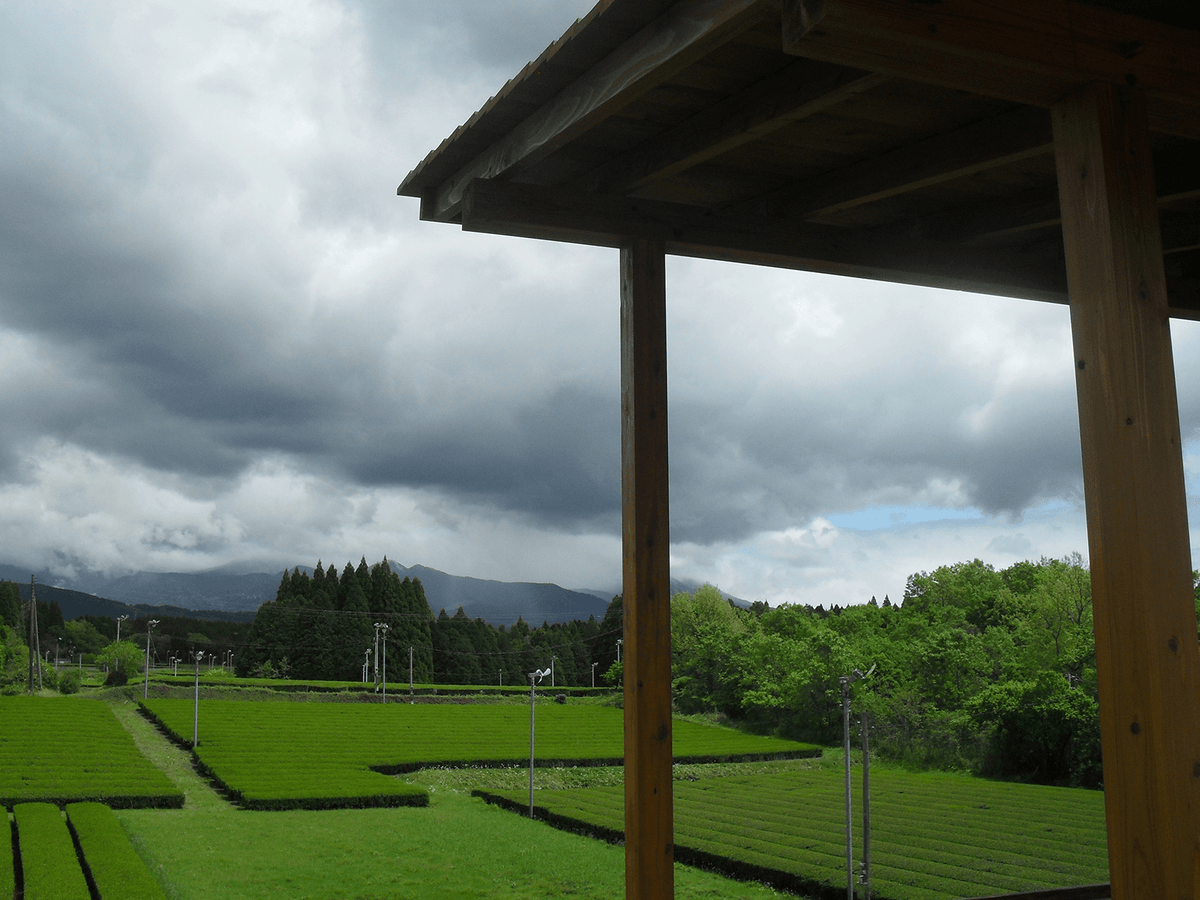
We arrived at the first farm in the morning, while mist was still hanging between the hills. The tea plants grew in perfectly formed green rows, surrounded by mountains, trees and an incredible amount of nature. As the mist slowly disappeared and the sun came through, I had this very simple feeling: this is right.
The duality of matcha
Being in Kagoshima made me realise that matcha itself has the exact duality I want MAZU to stand for.
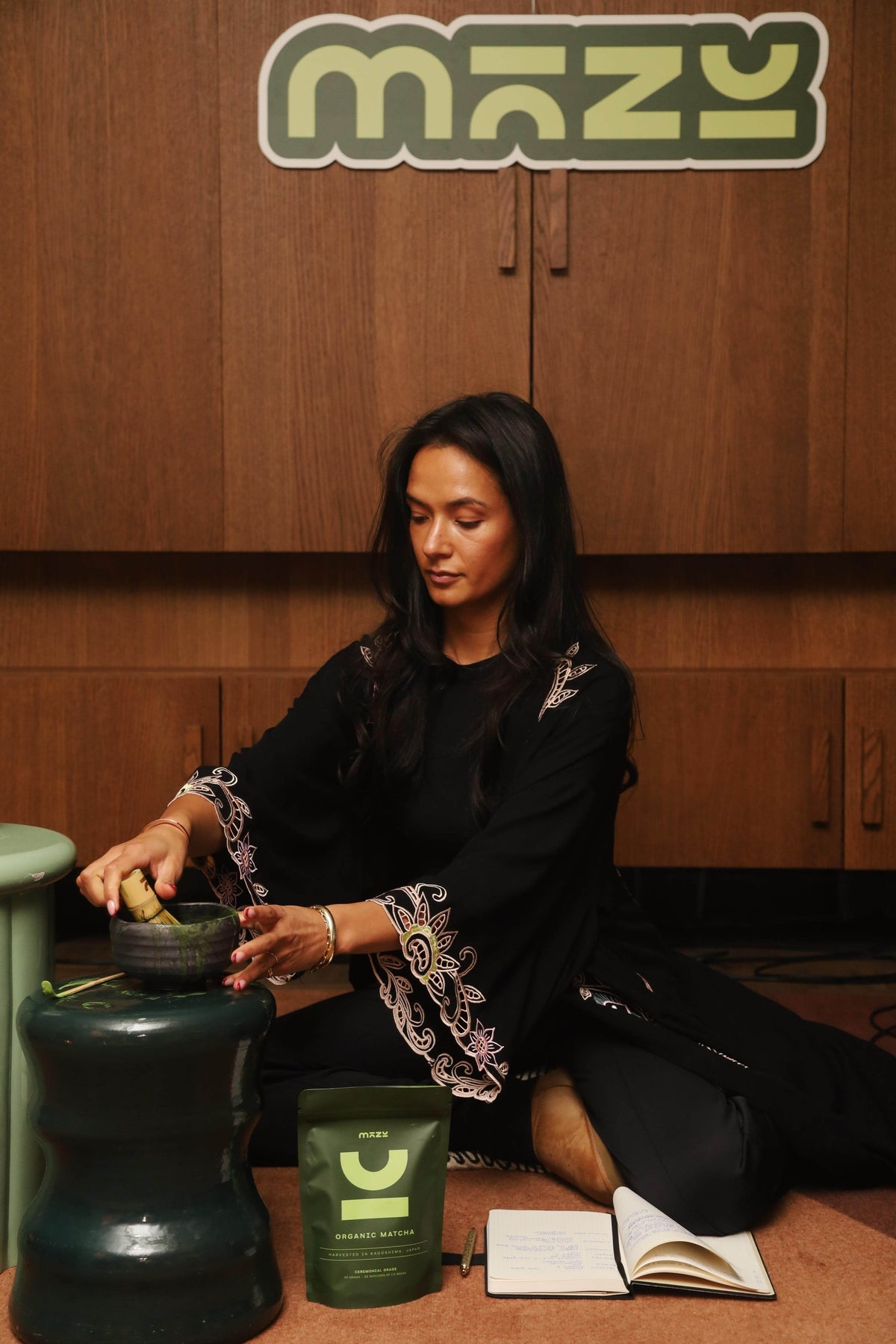
In the West, matcha has become incredibly aesthetic. It is part of fashion, wellness, cafés and culture. We serve it in beautiful glasses, carry it around after Pilates and turn it into strawberry lattes. It has become cool.
In Kagoshima, you see the completely different side of that same product. Matcha starts with agriculture: farmers, machinery, soil, weather and a very specific harvest window. During our visit, the farmers were preparing the tea plants for the first harvest by shading them from direct sunlight. The leaves that will eventually become matcha are processed into tencha before being ground into powder.
I don't think one side makes the other less authentic. Actually, the fact that matcha can exist in both worlds is exactly what makes it so interesting.
It is tradition and trend, agriculture and aesthetic. An ancient craft that somehow became one of the coolest drinks in cities on the other side of the world.
For me, that is very MAZU.

Knowing the chain
And interestingly, those two worlds need each other.
Our partner is the direct connection between the farmers and MAZU. He was born in Japan but studied and worked abroad in Singapore and New Zealand, and because he understands both Japanese culture and the international market, he moves very naturally between the two worlds.
Many farmers in Kagoshima speak little to no English, so having someone who knows them personally, understands their product and can also explain that world to us is incredibly valuable.
For several days he drove us between farms, answered every question I had and introduced us to the people behind the tea. What started as a supplier relationship has become something I hope we can build on for many years.
He started his matcha business around ten years ago, during a period when the industry was struggling. He told us how many younger Japanese people were no longer interested in taking over their parents' farms. They wanted to move to the city and pursue corporate careers instead.
Today, he is actively trying to make the industry attractive for a new generation by working with farming families who want to stop and creating opportunities for younger farmers who want to start.
The international popularity of matcha helped change that. The same Western culture that turned matcha into a lifestyle product also helped make the craft financially interesting again.
I think there is something quite beautiful about that.
We can be cynical about trends, but sometimes a trend gives a traditional product an entirely new future. In this case, the modern matcha culture that has taken shape in the West can also contribute to the future of the people who have been producing Japanese tea for generations.
Personally, I find this even more interesting in the age of AI. We have spent decades aspiring to corporate careers and moving away from traditional crafts. As technology changes many of those office jobs, I wonder whether skills that require hands, land, experience and time will become desirable again. Maybe progress doesn't always mean leaving the old behind but finding new value in it.

You can't rush a natural product
The farms also made me understand what purity actually means when you follow a product all the way back to its source.
A matcha harvest cannot simply be adapted to a sales forecast. Too much rain can affect the leaves, too much sun can damage them and every season develops differently. There is a relatively small window in which the young leaves are at their best, and the timing of the harvest affects the eventual colour, aroma, flavour and texture.
There is an enormous amount of knowledge and craftsmanship behind it, but also an element that nobody can fully control: nature. That is probably what makes it feel so pure.
So, what does “ceremonial grade” actually mean?
This was also one of the things I wanted to understand better in Japan, because there is a lot of information about matcha in the West that gets repeated without much context.
“Ceremonial grade” is a good example.
It sounds like an official Japanese classification, but it isn't. There is no regulated Japanese standard that defines exactly when a matcha may call itself ceremonial grade. Outside Japan, however, the term has become widely used to communicate a higher quality matcha intended primarily for drinking rather than cooking.
For MAZU, using the term is therefore a conscious choice.
Our customer understands what ceremonial grade communicates, but what matters much more to us is what sits behind those words: young tea leaves, early spring harvesting, careful shading and a matcha with the vibrant green colour, umami and smooth texture we are looking for.
I like knowing that distinction.
It is easy to put a beautiful word on a package. Understanding why the product deserves to be there is much more interesting.
Back to the Source
For us, origin isn't simply a country printed on the back of a package. It is knowing the chain, understanding the product and respecting the story behind it.
For MAZU, it also means allowing both sides of that story to exist. I don't want matcha to lose its Japanese craftsmanship to become cool, but I don't think respecting tradition means keeping it stuck in the past either.
It can be ancient and modern, pure and sexy, ritual and strawberry latte.
It can be both.